

Over the past few days, news out of the Middle East - particularly involving Iran - has pushed geopolitical risk back into the headlines. When events like this unfold, markets tend to react quickly. Volatility rises, investors shift toward safe-haven assets and energy prices often move higher.
None of that is unusual.
Markets dislike uncertainty (as do we humans) and geopolitical events create plenty of it. But the key question for investors isn’t what today’s headlines say. The real question is whether those headlines meaningfully change the long-term economic picture.
Most of the time, they don’t.
Right now, the main channel markets are watching is energy. Roughly 20% of the world’s oil supply passes through the Strait of Hormuz which sits at the center of the current tensions. When uncertainty rises in that region, oil prices tend to build in what analysts call a ‘geopolitical risk premium’.
In simple terms, markets temporarily price in the possibility that energy supply could be disrupted. That doesn’t mean it will happen - it simply means investors recognize the risk.
History shows these premiums often fade once it becomes clear that supply routes remain open and the situation stabilizes. Markets react quickly to the possibility of disruption, but they usually adjust just as quickly when those disruptions don’t materialize.
And, global powers have strong incentives to keep shipping lanes open as do energy producers.
That doesn’t mean markets won’t move around in the meantime. They probably will.
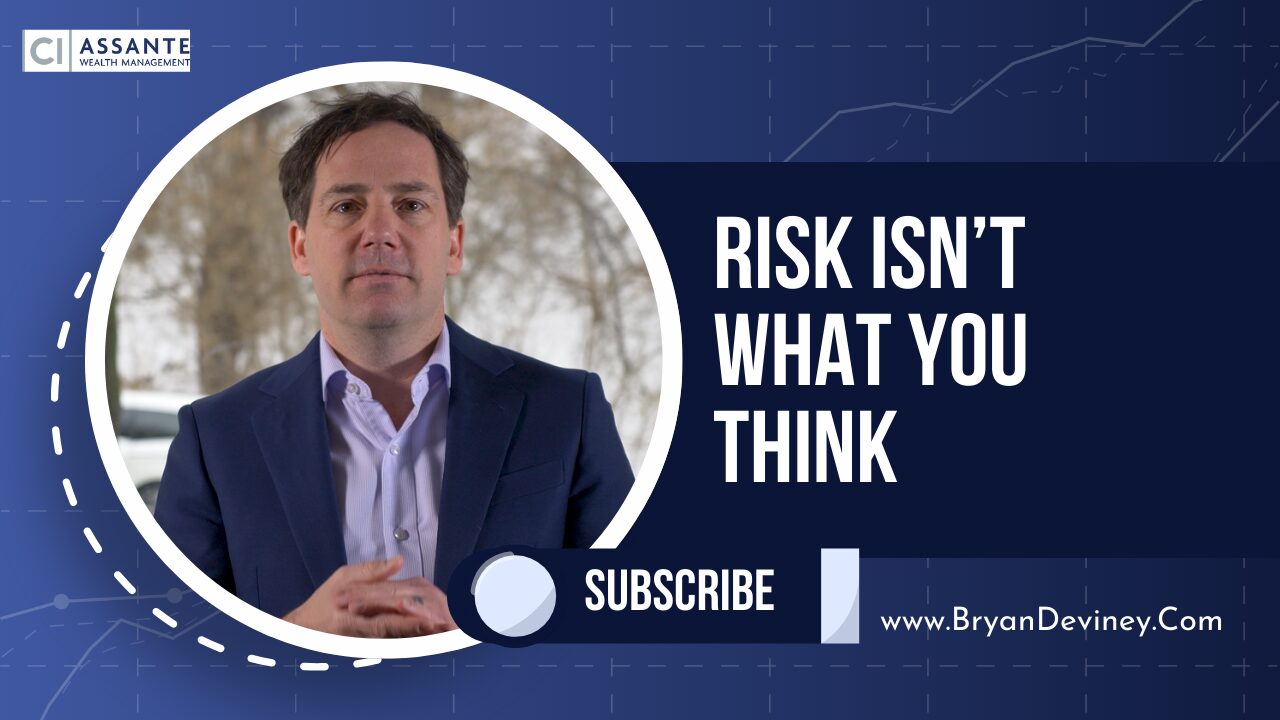
And that’s exactly the type of moment I had in mind when I recently wrote an article called “Risk Isn’t What You Think” (published January 23, 2026). When markets swing and headlines get louder, it’s easy to assume something unusual is happening. But volatility itself isn’t the real risk investors face. In fact, volatility is a normal - and unavoidable - part of investing.
Markets (and, again us humans) have always had to navigate geopolitical conflicts, political surprises, economic shocks and global crises. It doesn’t take a historian to list the litany of wars, oil embargoes, financial crises, pandemics and countless regional conflicts of last century.
Through all of it, markets have continued to grow. Not in a straight line, of course - but steadily over time as economies expand, businesses innovate and productivity improves.
Short-term market reactions can feel dramatic because they unfold quickly and dominate the news cycle. That’s exactly when it’s most important not to make rash changes to an investment plan. Ultimately, markets move based on fundamentals; not headlines. Those fundamentals: economic growth, innovation, corporate earnings and rising productivity change much more slowly than the news.
It’s also why we build portfolios the way we do.
Diversification isn’t something we do just for the sake of doing it. It’s what helps portfolios navigate uncertain environments. Different parts of the market respond differently to geopolitical events. Energy companies may benefit from rising oil prices. Other sectors may struggle. Global diversification spreads exposure across different sectors, regions and economies.
The goal isn’t to predict every geopolitical event before it happens. The goal is to build portfolios that are resilient enough to handle them when they do.
If you have any questions, feel free to get in touch.

Bryan Deviney is a Senior Financial Advisor with CI Assante Wealth Management Ltd. The opinions expressed are those of the author and not necessarily those of CI Assante Wealth Management Ltd. Please contact him at 416.216.6500 or visit www.bryandeviney.com to discuss your particular circumstances prior to acting on the information above. CI Assante Wealth Management Ltd. is a Member of the Canadian Investor Protection Fund and the Canadian Investment Regulatory Organization.
The case study mentioned in this presentation is provided for illustrative purposes only and does not represent an actual client or an actual client’s experience, but rather is meant to provide an example of our process and methodology. The results portrayed is not representative of all of our clients’ experiences.